


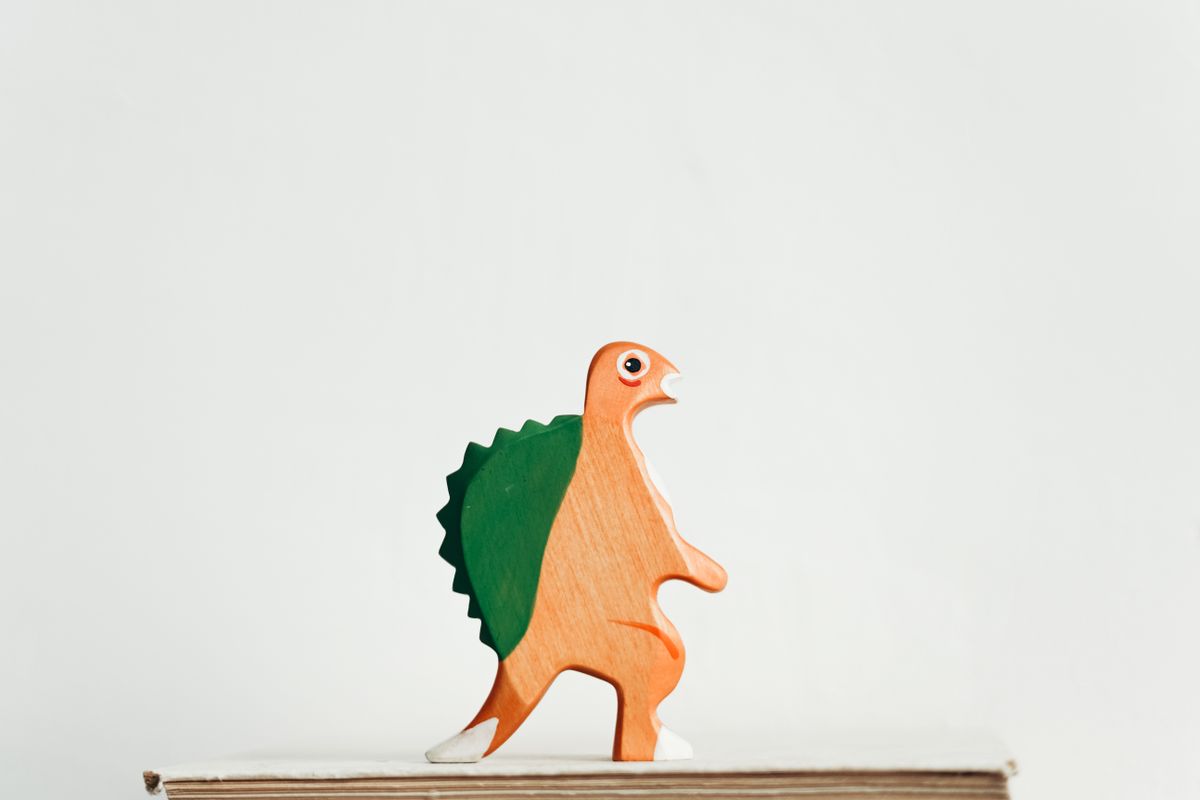
"Montessori toy" is now a label used by dozens of brands to sell all sorts of things. Here's how to distinguish a real Montessori toy from a product simply riding the trend.
Quick Answer: A true Montessori toy checks 6 boxes
Maria Montessori never trademarked her brand. The term is free to use, which opens the door to much abuse. To recognize an authentic Montessori toy, check these 6 criteria:
1. Natural material: wood, metal, fabric — no plastic except in exceptional cases.
2. Self-correction: the child understands if they succeeded on their own, without adult intervention.
3. One skill at a time: no "5-in-1" toys that dilute learning.
4. Realistic, not fantastical: a horse looks like a horse, not a pink glittery creature.
5. Child-sized: piece size, weight, at child's height.
6. Beauty and quality: Montessori values aesthetics and attention to detail.
If a toy meets at least 5 of these 6 criteria, it's a true Montessori-inspired toy. Otherwise, it's marketing.
Maria Montessori's pedagogical principles, in a few minutes
Maria Montessori (1870-1952) was an Italian physician, the first woman to graduate in medicine in Italy. She observed children struggling in traditional schools and developed a radically different pedagogical approach, based on the scientific observation of development.
Principle 1: Follow the child. The child has within them a natural developmental program. The adult does not teach; they prepare an environment and observe. Needs change according to "sensitive periods" (language, order, movement, sensory refinement...).
Principle 2: The prepared environment. Everything in the child's space must be at their height, within their reach, in a clear order. It is the environment that educates, more than lessons. A miniature kitchen, a low shelf with activities, an accessible reading nook.
Principle 3: Freedom within a framework. The child chooses their activities from those available. They can work on them for as long as they wish, without interruption. They cannot do just anything (disturb others, break materials), but they have real autonomy.
Principle 4: Self-education. The material is designed so that the child understands their mistakes and corrects themselves. No need for adult evaluation. This independence builds confidence and a love of effort.
Principle 5: Sacred concentration. When a child is concentrated on an activity, they are never interrupted — not even to be praised. Deep concentration is the basis of cognitive development.
A true Montessori toy serves these 5 principles. A toy that contradicts them (labeled "Montessori" but with 12 flashing functions, for example) is a fake Montessori.
The 6 criteria, in detail
Criterion 1: Natural materials
Wood remains the standard: rich tactile sensation (temperature, weight, grain), durability, evolving appearance (aged wood is beautiful). Metal can be relevant (spoons, trays). Fabric (cotton, linen) for textile manipulations. Plastic is exceptionally allowed (flexible Montessori rings for babies), but it should not dominate.
Criterion 2: Self-correction
The child must be able to check their work independently. A typical example: the pink tower. If the child places the largest cube at the top, the tower collapses — they understand instantly. No need for an adult to say "that's wrong." This integrated feedback loop is key.
Conversely, a toy that says "well done!" with every action does not respect this principle: the child seeks external approval rather than their own judgment.
Criterion 3: One skill at a time
A Montessori toy isolates one skill so that it can be worked on intensely. The shape sorter works on shape recognition. The lacing game works on fine motor skills. Not both mixed with a musical sound and lights.
This "maximum simplicity" may seem austere but it is effective: the child can focus all their attention, understand deeply.
Criterion 4: Realism
Maria Montessori was clear: before age 6, children need to understand the real world. They cannot differentiate between a pink glittery horse and a real horse. So we first present realistic animals, natural colors, miniature objects that resemble their adult versions.
Fantasy comes after age 6, when the child has a solid foundation of reality to build upon.
Criterion 5: Child-sized
Piece size adapted to the hand, weight manageable without excessive effort, shelves at child height. Everything must be thought of from the child's perspective, not the adult looking on.
Criterion 6: Beauty and quality
Maria Montessori insisted: children are sensitive to beauty. Ugly, damaged, or messy materials degrade the experience. Invest in a few beautiful materials rather than many mediocre ones.
The 5 marketing traps to be aware of
Trap 1: "Montessori Toy" written on the box. This label has no legal value. Anyone can use it. Check the 6 real criteria.
Trap 2: The multi-functional activity board. Many products today are sold as "Montessori" when they mix 15 activities on a board, with sounds, varied colors, and textures. This is the opposite of Montessori (one skill at a time).
Trap 3: Garish colors. True Montessori materials use colors sparingly and intentionally (the pink tower is pink for specific reasons). A neon multicolored "Montessori" toy is not one.
Trap 4: "Wood" marketing on imitation plastic. Many products claim "wood" when they are wood-grain laminate plastic. Check in a physical store or through photo reviews.
Trap 5: Montessori packaging on electronic toys. A battery-operated toy that talks, makes noises, and flashes is not Montessori, no matter what the box says. Maria Montessori predated electronics but would have been very critical of this type of passive stimulation.
Our Montessori selection by age group
0-12 months
Munari mobile (black and white, contrasts), Octahedron mobile (primary colors), wooden rattle, grasping ball, unbreakable Montessori mirror.
1-2 years
Object permanence box, lacing board, first shape sorters, treasure basket (everyday objects).
2-3 years
Pink tower (or wooden alternative), brown stair, first practical life activities (pouring, transferring), knobbed puzzles.
3-6 years
Sandpaper letters, numbers and counters, golden beads (mathematics), nomenclature cards (animals, plants, geography), sensory materials (cylinders, thermal tablets).
To start, choose 4-6 activities at a time on a shelf, and rotate every 3-4 weeks. More is not better in Montessori.
Frequently Asked Questions
Should I buy official Montessori materials (Nienhuis) or alternatives?
Nienhuis is the official manufacturer approved by the Association Montessori Internationale. Maximum quality, premium price (expect €50-150 per activity). For family use, serious alternatives (Tickit, Plan Toys, Hape) are largely sufficient at 2-3 times less cost.
My child isn't engaging with Montessori materials, is that normal?
Yes, it happens. Several possible reasons: material introduced too early (put away for 2 months and reintroduce), too many options at once (reduce to 3-4), lack of initial presentation (show once, calmly), or simply not the right time. Don't worry, observe.
Can you do Montessori at home without training?
Yes, by reading 1-2 reference books ("60 Montessori activities for my baby" by Marie-Hélène Place). But no need to do everything: starting with the prepared environment (low shelf, observation tower, daily autonomy) is enough to integrate 80% of the philosophy.
Is Montessori suitable for all children?
Yes, in theory, it's universal. In practice, some very exuberant children struggle with the silent concentration required. For them, we adapt: shorter sessions, alternating physical activities, no pressure. Parental observation guides adjustments.
How much does a Montessori corner at home cost?
To start correctly between 0 and 3 years: €200-€400 (observation tower, shelf, 6-8 basic activities). You can do it for much less with second-hand items and DIY (IKEA tray, Action baskets). The spirit matters more than the price.
Does Montessori oppose traditional schooling?
Not necessarily. Many children attend traditional school AND have a Montessori environment at home. It's complementary. Private Montessori schools exist (expect €5000-€10000/year), but family Montessori at home is perfectly relevant.
Are there risks to practicing Montessori at home?
No pedagogical risks. The only risk is parental perfectionism: putting pressure on oneself to have "the right material," to prepare everything perfectly. Maria Montessori valued joyful imperfection over stressed perfection. Keep it simple.