


"Educational toy" has become a universal marketing buzzword. Yet, few toys truly deserve this title: most of them distract without teaching anything. Here's a rigorous list of what works in 2026.
What is a truly educational toy?
Before the list, let's define it. An educational toy meets 3 criteria:
1. It develops a specific skill (fine motor skills, logic, language, spatial reasoning...). Not just a vague "awakening."
2. Learning happens through action, not passivity. The child manipulates, experiments, and forms hypotheses.
3. The game remains enjoyable. If the child gives up after 5 minutes out of boredom, they learn nothing. The best education is disguised as play.
Many toys marketed as educational fail one of these 3 criteria. Educational tablets, for example, often put the child in a passive position and limit them to multiple-choice options — with almost zero effectiveness.
Educational toys in science and reasoning (STEM)
1. LEGO and Magna-Tiles: the basis of spatial thinking
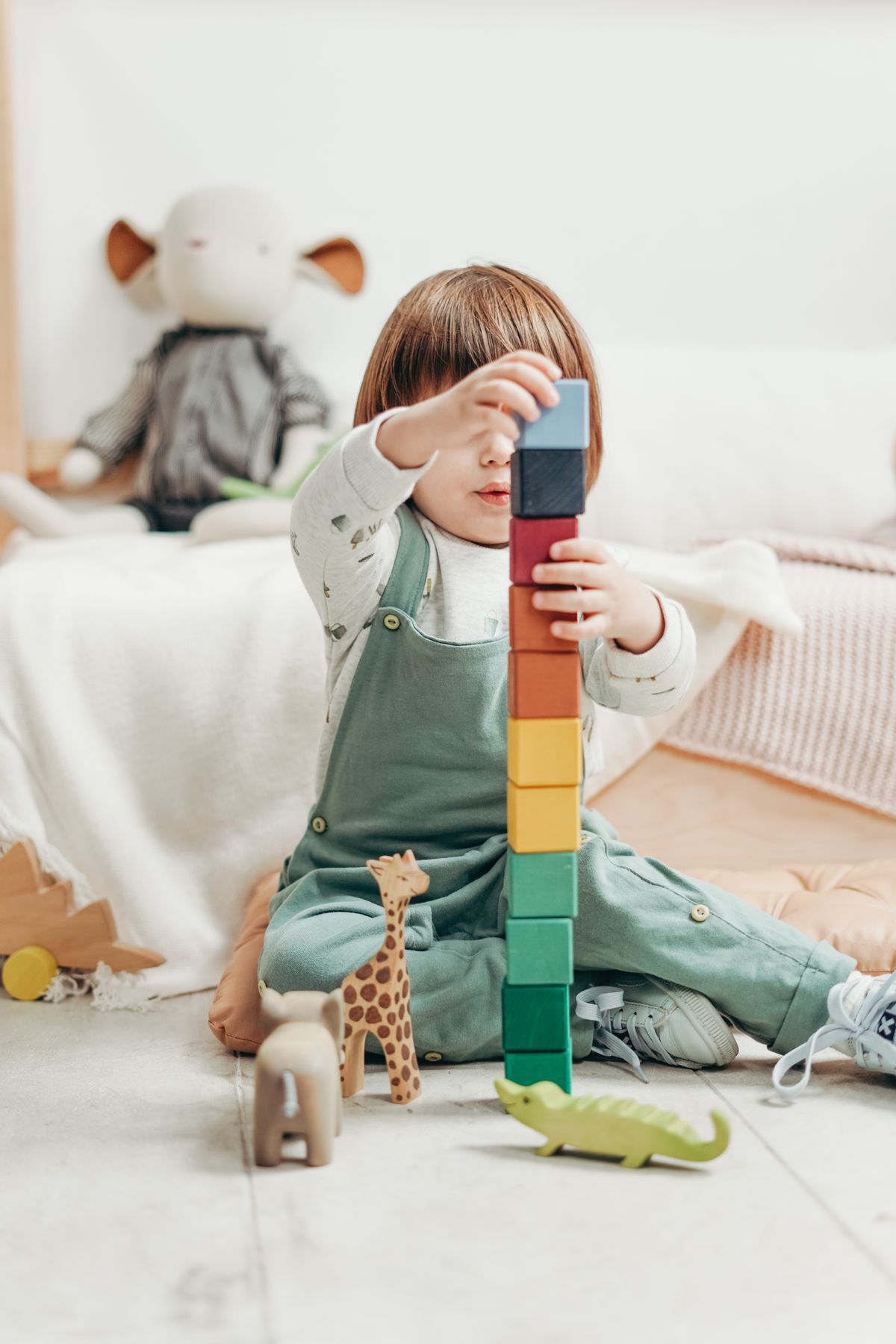
Confirmed studies: children who regularly play with blocks develop superior spatial reasoning, a predictor of success in mathematics and science. LEGO Classic and Magna-Tiles are the absolute benchmarks.
2. Microscope and observation magnifying glass
A suitable microscope (Buki Junior from 6 years old, more advanced models later) opens up a whole universe: observing a hair, salt, a leaf. The wonder is immediate and lasting.
3. Kids' chemistry kit
Buki, Clementoni, Petit Génie: these kits offer spectacular experiments (volcanoes, crystals, static electricity) in complete safety. Ideal for 7-12 year olds to cultivate a love for science.
4. Programmable robots (Beebot, Cubetto, Ozobot)
Introduction to block coding, without a screen. The child programs a route, the robot executes it. Excellent entry into algorithmic thinking. From 4 years old for Cubetto, from 6 years old for others.
5. Interactive globe
Geography, flags, languages, animals. Modern versions (Janod, Oregon Scientific) combine a physical object with an app. Very effective for opening up to world cultures.
Educational toys for language and reading
6. Montessori sandpaper letters
Touching the shape of the letters by tracing them, while pronouncing the sound: this is the most effective way to prepare for reading. From 4 years old. Nienhuis versions (expensive) or alternatives (Hape, Janod).
7. Word box and movable alphabet
From kindergarten (5 years old), composing words with movable letters provides a tactile and visual experience that accelerates reading acquisition.
8. Picture books and first books
Reading 10-15 minutes a day is the number one language investment. Larousse picture books for toddlers, Sami et Julie for first grade, first comics for second grade.
9. Linguistic board games
Tic Tac Boum Junior, Cortex Junior, I learn to read with Sami: these games develop vocabulary, pronunciation, and recall speed in a friendly family setting.
Educational toys for logic and mathematics
10. Montessori beads (mathematics)
The Montessori golden bead method makes base 10 visible and tangible. Children understand units, tens, hundreds with their hands before understanding them with their heads.
11. Cuisenaire rods or mathematical rods
Cuisenaire rods, created by a Belgian teacher, make arithmetic concrete. 1 + 3 = 4 becomes a visual equivalence. Adopted in thousands of schools.
12. Logic puzzles and jigsaws
Tangram, Rush Hour, Plus-Plus blocks, wooden puzzles: training logical thinking in a fun, autonomous way. The best ones progress by levels.
13. Strategy board games
From 7-8 years old: Catan Junior, Carcassonne, Splendor, Saboteur Junior. These games develop planning, evaluating choices, and patience.
Educational toys for creativity and expression
14. Art and craft supplies
Quality pencils (Stabilo, Faber-Castell), inexpensive but washable gouache (Maped), various papers, suitable scissors. Regular artistic expression develops fine motor skills and self-confidence.
15. Early musical instruments
A xylophone, maracas, a child's ukulele can spark a true passion for music. The earlier a child manipulates instruments, the more their musical ear develops (Northwestern University study, 2014).
What is NOT an educational toy (despite the marketing)
Educational tablets with learning apps. French CNRS 2019 study: children who spend time on "educational" tablets have lower reading and reasoning scores than those who play non-educational, screen-free games. Passivity kills learning.
Talking cubes that name colors and letters. Studies: they reduce parent-child interactions (key to language) and provide no verifiable cognitive benefit.
Early learning flashcards. Memorizing words at 18 months provides no advantage at 6 years old. It's even counterproductive for future school engagement.
TV programs labeled "educational" before age 3. No proven benefit, several studies show language delays in heavy consumers.
Pure memorization games without reflection (memorizing flags, dates, capitals). The child remembers, but does not understand. Understanding requires manipulation, experimentation, context.
Frequently asked questions
How much should I spend annually on educational toys?
€100 to €250 per year per child is more than enough to cover the essentials in key areas. Quality trumps quantity: a single excellent microscope kit at €60 is better than an accumulation of small, generic toys.
Do educational toys replace school?
Not at all. They complement school by stimulating the child's interests at home. A child passionate about science with a microscope and chemistry kit at home will be more engaged in class — it's a virtuous cycle.
My child rejects all educational toys, what should I do?
They are probably presented too much as "educational." Rephrase it: not "you're going to learn numbers" but "look, we're building a dragon." Play must remain play. If nothing works, observe their interests and start there.
Are wooden educational toys better than plastic ones?
Often yes, but not always. A quality programmable robot made of plastic is better than a poorly designed wooden toy. The criterion is the underlying pedagogy, not the material alone. Wood is preferred for early learning for 0-3 year olds.
When should I introduce STEM toys?
Spatial reasoning begins at 18 months (large blocks). Simple logic at 3 years old (inlays). True STEM toys (microscope, robots, chemistry kits) from 5-6 years old. Adapt to the child's pace.
Should I prioritize the brand or the educational content?
Content, always. A known brand does not guarantee pedagogical quality (Mattel, VTech also have hollow products). Read detailed reviews, see what is actually learned, and ask teachers if possible.
My "adult" child (8 years old) is neglecting toys, is this a problem?
Not necessarily. Around 8-10 years old, many children migrate to books, sports, music, and family digital games. This is natural development. Educational toys give way to more complex structured activities. Follow the child rather than forcing them to play.